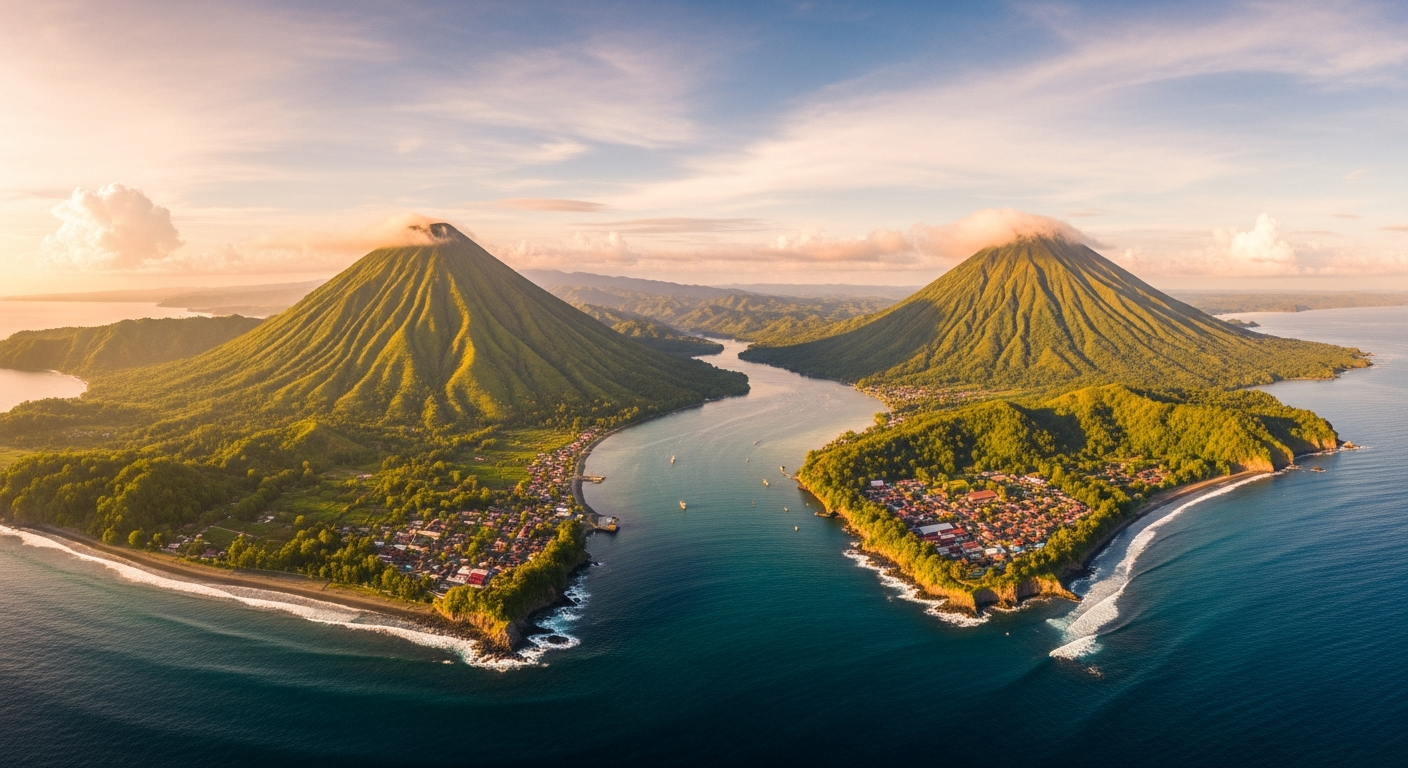
The scent of clove and nutmeg drifts on the equatorial breeze as your vessel approaches the ancient Maluku archipelago. A Maluku tour reveals the authentic legacy of the Spice Islands, where history unfolds beneath vibrant coral gardens and on shores shaped by powerful sultanates and colonial empires.
The Enduring Allure of the Maluku Tour: A Heritage Expedition
A Maluku tour is an invitation to explore the genesis of global trade, tracing routes that once dictated world economies. These islands, known historically as the Spice Islands, remain a crucible of cultural exchange and natural splendor, drawing travelers who seek depth beyond typical itineraries. From the 16th century, European powers like the Portuguese, Dutch, and English vied for control of these precious commodities: clove (Syzygium aromaticum) and nutmeg (Myristica fragrans). The strategic importance of Maluku led to the construction of over 50 colonial forts, many still standing today, offering tangible links to this tumultuous past. For instance, Fort Oranje on Ternate, built by the Dutch in 1607, served as the Dutch East India Company’s (VOC) administrative center for decades.
Our expeditions connect the dots between these historical points, providing an intimate perspective on the forces that shaped modern Indonesia and global commerce. Guests journey aboard luxury liveaboards, often transiting from the southern reaches of Raja Ampat, where Misool’s dramatic karst landscapes mark a natural gateway. We prioritize encounters that respect local traditions and environments, partnering with communities to ensure sustainable tourism. The region’s marine biodiversity, part of the Coral Triangle, supports over 76% of the world’s coral species, a fact documented by marine biologists since the early 20th century. Expeditions often include expert naturalists who illuminate the intricate ecosystems. The average water temperature here hovers around 28°C (82°F), ideal for year-round diving. Maluku Tour designs each itinerary for the discerning guest, offering private access to historical sites and exclusive interactions with local historians and descendants of royal families. This approach ensures a narrative-rich journey, rather than a mere sightseeing trip, offering insights into the enduring legacy of the Spice Route, a maritime network active for over two millennia. Wikipedia details the global impact of the spice trade.
Ambon: Central Gateway and Echoes of Colonial Power
Ambon Island serves as the primary entry point for Maluku tours, a vibrant port city with a history deeply entwined with the spice trade. Arriving at Pattimura International Airport (AMQ), travelers immediately feel the island’s unique energy, a blend of resilience and tropical allure. The city of Ambon, or Amboina as it was known historically, became a key Dutch stronghold, evidenced by Fort Victoria, established in 1605. Though rebuilt multiple times, its foundations speak to centuries of strategic importance. Guests explore Kota Ambon’s historic quarter, where Dutch colonial architecture still lines narrow streets, dating from the 17th to the early 20th centuries. These buildings, often with characteristic louvred windows and high ceilings, offer a tangible link to a bygone era.
Beyond its urban core, Ambon offers diverse landscapes. The island’s interior features lush hills and a coastline dotted with secluded bays. Laha Beach, approximately 15 kilometers (9 miles) from the city center, provides a tranquil setting for reflection. The Maluku Marine Park, designated in 2009, protects significant coral reef systems surrounding Ambon, offering spectacular snorkeling and diving within easy reach. The park spans over 1,500 square kilometers (579 square miles). Maluku Tour emphasizes responsible exploration of these areas, ensuring minimal environmental impact. Cultural engagements include visits to local communities, where traditions of sago processing and traditional music persist. The Siwa Lima Museum, founded in 1973, preserves artifacts reflecting Maluku’s ethnography and history, including VOC-era documents and indigenous weaponry. Ambon’s strategic location also makes it a convenient hub for onward journeys to the Lease Islands (Saparua, Haruku, Nusa Laut), often reached by private charter speedboats in under 90 minutes. This combination of historical depth and natural beauty makes Ambon an essential component of any comprehensive Maluku tour. Indonesia Travel provides more insights on Ambon.
The Banda Islands: Cradle of Nutmeg and Colonial Drama
The Banda Islands, a small archipelago southeast of Ambon, represent the historical epicenter of the global nutmeg trade. These islands, particularly Banda Neira, were once the sole source of nutmeg and mace, spices that commanded exorbitant prices in European markets from the 16th to the 19th centuries. The dramatic landscapes, dominated by the active volcano Gunung Api (Gunung Berapi), create a powerful backdrop to centuries of human ambition and conflict. Fort Belgica, a pentagonal bastion built by the Dutch East India Company (VOC) in 1611, stands as a UNESCO World Heritage Tentative Site, offering panoramic views and a stark reminder of colonial power. Its walls, up to 3 meters (10 feet) thick, protected the precious nutmeg plantations.
Guests on a Maluku tour spend days exploring Banda Neira’s historic town, walking cobblestone streets where Dutch merchants once walked. The former residence of Governor-General Jan Pieterszoon Coen, now a museum, houses artifacts from the VOC era. Visits extend to the nutmeg plantations themselves, where the fragrant fruit (Myristica fragrans) still grows, harvested using traditional methods. Guides explain the intricate process of drying nutmeg and separating mace, a practice largely unchanged for 400 years. The waters surrounding Banda are equally compelling. Renowned for their pristine coral reefs and dramatic drop-offs, they attract divers seeking encounters with hammerhead sharks and other pelagic species. The Banda Sea reaches depths of over 7,000 meters (23,000 feet) in places, contributing to its unique marine environment. Conservation efforts in the region, supported by local initiatives since 2005, focus on protecting marine biodiversity and traditional fishing practices. A visit to the island of Rhun, traded to the Dutch by the English in 1667 for Manhattan Island, underscores the immense value once placed on these tiny landmasses. The Banda Islands offer a profound connection to a pivotal chapter in global history.